Royal Docks studio moves: manoeuvring narrow stairs
Posted on 26/05/2026
Royal Docks studio moves: manoeuvring narrow stairs without the stress
Studio moves can look deceptively simple. One room, fewer possessions, less packing, job done - except the moment you meet a tight staircase in a Royal Docks block, the whole day changes. Narrow turns, awkward landings, low bannisters, shared entrances, and the occasional stubborn sofa bed can turn a small move into a proper puzzle. That is exactly why Royal Docks studio moves: manoeuvring narrow stairs deserves a careful, practical approach rather than a last-minute guess.
Whether you are moving out of a compact flat near the dockside, heading into student accommodation, or shifting a furnished studio from one floor to another, the biggest challenge is usually not volume. It is access. This guide walks through the real-world methods, risks, tools, and decision points that make narrow-stair studio moves smoother, safer, and far less chaotic. A bit of planning goes a long way. Truth be told, it saves your back too.
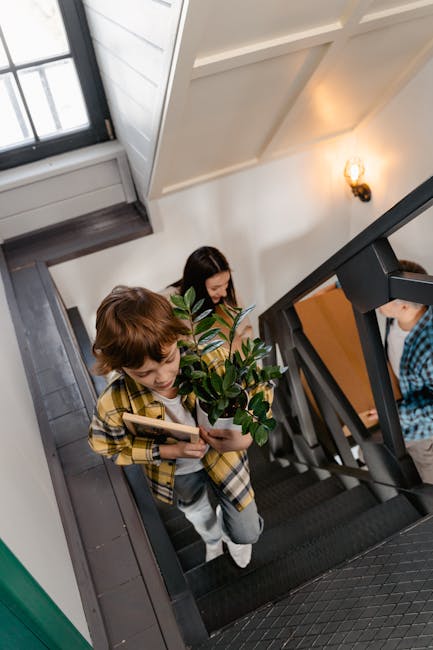
![View from the top of a staircase inside a home shows a young woman with dark hair carrying a medium-sized cardboard box, likely for a house move, as part of a home relocation process. A young boy in a yellow checked shirt is standing on the staircase holding a potted plant with broad green leaves, possibly being moved to a new location. The staircase is carpeted in dark grey or black, with a black metal handrail and a white wall on the side. Near the top of the stairs, a wall-mounted light fixture is visible, casting a warm glow. A window with black framing lets in natural light, illuminating the scene. The setting indicates an interior preparation or packing phase of a furniture transport or house removal, with the focus on moving various household items such as a plant and cardboard boxes, assisted by [COMPANY_NAME], a professional removals service.](/pub/blogphoto/royal-docks-studio-moves-manoeuvring-narrow-stairs1.jpg)
Why Royal Docks studio moves: manoeuvring narrow stairs Matters
In a studio move, the staircase often becomes the whole story. Many Royal Docks properties - especially flats, converted buildings, and compact modern developments - rely on stair access that was never designed around oversized wardrobes, mattress toppers, or a lumpy two-seater sofa. That means the move is not just about carrying items. It is about planning the route, protecting shared spaces, and avoiding damage on the way down or up.
Narrow stairs matter because they create a chain reaction. A tight first landing can make a mattress twist. A sharp corner can catch a wardrobe door. A banister can scrape paint if the mover rushes the angle. And if one person tries to "just wing it", you can end up with broken handles, chipped walls, or a very awkward silence in the hallway. Not ideal.
There is also a local reality here. In Royal Docks, you may be dealing with busy streets, time-limited parking, and buildings where access must be kept clear for neighbours and other residents. So the job is not just physical. It is logistical. That is why many people look for a flat removals service in North Woolwich or a broader removals team for North Woolwich when stairs are the main problem, not the number of boxes.
If you are moving in or out of a studio, the staircase question is usually the one that decides whether the move feels manageable or miserable. Simple as that.
How Royal Docks studio moves: manoeuvring narrow stairs Works
Manoeuvring furniture and boxes down narrow stairs is a mix of measurement, sequencing, body positioning, and patience. The basic idea is easy enough to say: move the biggest items first, protect the route, and keep the load under control at every step. Doing it well takes a bit more judgement.
Start with a quick access survey. Measure the staircase width, check ceiling height at landings, note any tight turns, and spot anything that could snag - lights, railings, protruding skirting, even a low doorframe near the stairs. A lot of issues show up only when someone holds a mattress at shoulder height and tries to pivot. Better to discover them earlier, with a tape measure and calm breathing.
Then break the move into categories:
- Large but light items such as mattresses, desk chairs, lightweight shelving, and foam bedding.
- Large and awkward items such as wardrobes, bed frames, and flat-pack furniture.
- Dense items such as boxes of books, kitchenware, and small appliances.
Each category needs a different handling style. A mattress can flex and rotate; a heavy book box cannot. That distinction matters more than people think. If you want to understand the body mechanics behind it, the guide on kinetic lifting techniques is a helpful companion read.
In practice, movers often work one item at a time through the narrowest section, with one person guiding from below and another steadying from above. For larger studio pieces, the team may tilt, rotate, or "walk" the item sideways to clear the landing. Sounds simple. It rarely is. That is why experience matters.
Key Benefits and Practical Advantages
When narrow stairs are handled properly, the benefits show up immediately. The move feels calmer, the property stays in better condition, and you are far less likely to have to stop halfway through and rethink everything. Nice, really, when a move can still feel civilised.
Key advantages include:
- Less damage risk to walls, banisters, flooring, and item corners.
- Better personal safety, especially when carrying awkward or heavy items.
- Faster load-out because the route has been assessed in advance.
- Reduced stress for tenants, landlords, and neighbours.
- Smarter use of labour since the move is organised around access, not just box counts.
There is also a practical money-saving angle. If you know in advance that the stairs are tight, you can decide whether you need a smaller van, extra movers, specialist wrapping, or temporary storage. That kind of planning can prevent costly mistakes. For a broader sense of move planning, many readers also find worry-free house relocation advice useful, even for smaller studio jobs.
And let's not ignore the emotional side. A move already has enough moving parts. When the difficult bit is handled with care, the whole day feels lighter. You can actually think.
Who This Is For and When It Makes Sense
This type of moving approach is especially useful if you are dealing with a compact property and limited access. In Royal Docks, that often means studios in apartment blocks, older conversions, student lets, riverside developments, and homes where the lift is tiny, broken, or simply not suitable for bulky items.
It makes sense for you if:
- your studio is on an upper floor with no suitable lift access;
- the staircase has a tight corner or narrow landing;
- you own furniture that cannot be dismantled easily;
- you are moving on a tight schedule;
- you need to protect the property as part of a tenancy handover;
- you are moving alone or with only one helper;
- the property is near a busy road where stopping time matters.
Students moving into or out of shared blocks often run into this exact problem, which is why a service like student removals in North Woolwich can be a smart fit. Likewise, if you only need hands-on support for furniture rather than a full household move, furniture removals in North Woolwich may be the more sensible route.
Sometimes the answer is not "hire a huge team". Sometimes it is "choose the right help for a tight staircase and a small load". That small distinction saves a lot of faff.
Step-by-Step Guidance
Here is a clear way to approach Royal Docks studio moves when the stairs are narrow. Keep it simple and sequential. Rushing the order is how people end up carrying a mattress backwards at an angle they absolutely did not plan for.
1. Survey the staircase before moving day
Check width, turn radius, headroom, and any obstacles. Look for light fittings, wall corners, loose carpet edges, or railings that might catch. If you can, take a few photos. They are oddly useful when deciding whether a wardrobe will clear the bend or not.
2. Decide what must be dismantled
Flat-pack furniture, bed frames, shelving, and some desks often move better in parts. If a piece can be safely taken apart, it usually should be. This reduces strain and makes the item easier to tilt around the stairs. For anything more delicate or high-value, think twice before dismantling on your own.
3. Pack by weight, not just by room
Heavy books, crockery, and small appliances should be packed into smaller boxes. A box that looks neat but feels like a brick is a mistake waiting to happen. If you need a more systematic approach, these packing strategies are worth using.
4. Protect the route
Use floor coverings, blankets, or cardboard to reduce scuffs. This is especially important in rental properties where stairwell condition matters. Protecting the route is not overcautious; it is just good manners, really.
5. Move the biggest awkward item first
In most studio moves, that means the mattress, bed base, wardrobe sections, or sofa. You want the hardest item moved while energy and concentration are still high. Keep smaller boxes back until later.
6. Use the right body position and communication
One person should lead and call the pace. The other follows the instructions. Avoid chatter at the wrong moment, but do keep speaking. A simple "pause", "tilt", or "clear" is often enough. Small words, big difference.
7. Finish with a final route check
Once the major items are out, do a last sweep of the stairwell and landing. Check for forgotten screws, packing tape, dust sheets, and any accidental marks. If anything needs repairing or reporting, do it early, not after the keys have been handed over.
A good studio move is rarely dramatic. It is mostly a chain of small, sensible choices. That's the secret, if there is one.
Expert Tips for Better Results
There are a few little details that make narrow-stair moves much easier. None of them sound exciting. They just work.
- Use shorter boxes for books. People overfill large boxes all the time. Then they cannot safely lift them, which kind of defeats the point.
- Wrap corners and handles. A folded blanket or proper furniture wrap can prevent the exact kind of scratch that looks tiny but annoys you forever.
- Take doors off only if it helps. In some buildings, removing a bedroom door is enough to create a better turning angle. Just keep the screws in a labelled bag.
- Clear the landing completely. Even one pair of shoes or a laundry basket can make a turn awkward.
- Lift less, slide more. If the surface and item allow it, controlled sliding can reduce strain. Not dragging, though. There is a difference.
- Plan for the return trip. If you are moving in, think about how items will go up the stairs, not only down.
For heavier pieces, the safest route is often to involve professionals who are used to this sort of work. A dedicated man with a van in North Woolwich can be a practical option for smaller loads, while a larger team may be better for mixed furniture and multiple flights.
And if you are moving items that are physically awkward in a very specific way - a piano, for example - do not improvise. Read up on professional piano moving. The lesson transfers well: the more awkward the object, the more important the right handling is.
Common Mistakes to Avoid
Narrow stairs expose bad moving habits very quickly. One wrong angle and the whole operation gets messy.
- Underestimating the staircase. People often assume "it looked fine online" is enough. It rarely is.
- Trying to move too much at once. Carrying multiple boxes may feel efficient until one slips on a turn.
- Skipping the measurement stage. A tape measure can save a whole morning.
- Not checking weight distribution. Uneven loads pull awkwardly and strain shoulders.
- Rushing in shared hallways. That is when damage and neighbour friction happen.
- Ignoring the return journey. A studio move into a top-floor flat is a different job from one going down.
One more thing: do not assume solo lifting is fine just because the item is "only" a bedside table. If it is awkward, bulky, or slippery, it can still go wrong. The article on handling heavy objects on your own is a good reminder of where solo effort stops being sensible.
If the move includes household items in poor condition or fragile furniture you no longer want, it may be worth using storage options in North Woolwich for anything that should not be hurried through a staircase at all.
Tools, Resources and Recommendations
You do not need a truck full of fancy equipment. But the right basics make a huge difference.
| Tool or resource | What it helps with | Why it matters on narrow stairs |
|---|---|---|
| Furniture blankets | Surface protection | Reduces scratches on bannisters, walls, and furniture edges |
| Straps or lifting aids | Grip and control | Improves stability on turns and landings |
| Bubble wrap and corner protectors | Fragile item protection | Useful for shelves, frames, and sharp edges |
| Labels and marker pens | Organisation | Makes unloading faster and reduces confusion |
| Vacuum bags | Soft item compression | Great for bedding and textiles in studio moves |
| Tape measure | Access planning | Essential for checking whether furniture will actually fit |
Support resources matter too. If you are still sorting through items before moving day, a decluttering strategy can reduce the number of things that need to fight their way down the stairs. For bedding and frame sizes, bed and mattress moving guidance is also worth a look.
If your move is time-sensitive and the access is difficult, ask about same-day removals in North Woolwich only if the route has already been checked. Speed without planning is not really speed. It is just panic wearing trainers.
Law, Compliance, Standards, or Best Practice
For a studio move, you usually do not need to wade through a mountain of regulation, but a few UK best-practice points matter. If your move involves a shared building, be considerate about access, noise, and communal areas. Lease terms and building rules can also affect when and how items may be moved, particularly if lifts, corridors, or fire exits are involved.
On the safety side, manual handling is the big one. The general principle in UK moving practice is simple: avoid unnecessary risk, assess the load before lifting, and do not attempt something that is clearly beyond your ability or the space available. That is especially relevant with tight stairwells where posture gets awkward and visibility can be poor.
Professional movers should also work in line with reasonable care for the property and the customer's belongings. If you are comparing providers, it is sensible to check insurance and safety information, along with the company's health and safety policy. Those pages do not solve the staircase problem by themselves, of course, but they tell you a lot about how seriously the business approaches risk.
For general service expectations and terms, it is also worth reviewing the services overview, terms and conditions, and pricing and quotes before booking. Clear information tends to mean fewer surprises later.
Accessibility matters as well. If your move involves someone with limited mobility, or the route is difficult for any reason, check the provider's accessibility statement and ask practical questions early. That is not being awkward. It is being prepared.
Options, Methods, or Comparison Table
There is more than one way to handle a studio move with narrow stairs. The right choice depends on the size of the load, how tight the access is, and how much time you have. Here is a simple comparison.
| Method | Best for | Pros | Trade-offs |
|---|---|---|---|
| DIY with a helper | Very small loads and straightforward stairs | Lower upfront cost, flexible timing | Higher risk if items are awkward or the stairwell is tight |
| Man and van support | Single-studio or light furniture moves | Practical, efficient, often quicker than full DIY | May still need careful dismantling and packing beforehand |
| Full removals team | Heavier furniture, multiple trips, or tricky access | More hands, better handling, less strain on you | Usually costs more than a small van-only job |
| Storage-first approach | Moves that need staging, delays, or downsizing | Reduces pressure on moving day | Requires planning and an extra step in the process |
If you are unsure which route to choose, a quick conversation with a removal company in North Woolwich can help you judge the access and decide whether a small-team approach is enough. For many Royal Docks studio moves, that is the difference between a smooth morning and an exhausting afternoon.
Case Study or Real-World Example
A typical Royal Docks studio move might look something like this. A tenant is leaving a top-floor studio with a narrow stairwell, one awkward turn on the first landing, and a small fitted wardrobe that cannot go down in one piece. The mattress is light enough, but the bed frame has long slats and a few sharp corners. There is also a desk, a chair, and a stack of boxes with books, kitchen items, and winter clothes.
The successful approach is usually simple:
- the wardrobe is dismantled into panels;
- the mattress is wrapped and moved first while the stairs are clear;
- book boxes are split into smaller loads;
- the desk legs are removed to reduce width;
- the team protects the stair edges and landing before starting.
What makes the move work is not brute strength. It is sequence. The heavy awkward item is not dragged through the stairwell after everything else is already tiring the team out. The move is planned around the worst access point, not the easiest item. That is the trick, if you can call it that.
For a similar mindset around larger or more specialised furniture, many customers also consult sofa handling and storage advice before deciding whether to move, store, or dismantle a bulky piece.
One small, real-world detail: in winter, stairwell surfaces can feel damp and a bit cold, and that changes grip. In summer, the opposite problem appears - heat, sweat, and tired hands. Neither is dramatic, but both affect control. Little things, but they count.
Practical Checklist
Use this checklist a day or two before the move. It keeps the job grounded.
- Measure the stair width, landing size, and any tight turns.
- Check whether the biggest items can be dismantled safely.
- Pack heavy items into smaller boxes.
- Label boxes by room and weight.
- Protect walls, corners, and flooring on the route.
- Clear hallways, landings, and the front entrance.
- Confirm parking or van access near the property.
- Keep tools, screws, and fixings in labelled bags.
- Wear sensible shoes with a good grip.
- Check whether you need help for the heaviest or most awkward item.
- Review storage options if not everything is going in one trip.
- Do a final sweep for damage, debris, and forgotten items.
If you are still building your moving plan, it may also help to look at pre-move cleaning techniques and smart packing ideas. A tidy, well-packed studio is much easier to move through a narrow stairwell. No surprise there, but it is amazing how often that bit gets missed.
Conclusion
Royal Docks studio moves are rarely about moving "a lot". They are about moving the right way through a space that leaves very little margin for error. Narrow stairs demand planning, careful packing, sensible lifting, and a calm, practical sequence. If you prepare the route, break down awkward furniture, and choose the right support for the job, the whole move becomes far more manageable.
That is the real message here: small moves still deserve proper technique. Sometimes especially small moves, because every item has to pass through the same tight point. Get that part right and the rest feels lighter. Not easy, exactly, but easier.
Get a free quote today and see how much you can save.
If your Royal Docks studio has narrow stairs and you want a smoother moving day, ask for help early, plan the access properly, and give yourself a bit of breathing room. Future-you will be grateful. Honestly.
![View from the top of a staircase inside a home shows a young woman with dark hair carrying a medium-sized cardboard box, likely for a house move, as part of a home relocation process. A young boy in a yellow checked shirt is standing on the staircase holding a potted plant with broad green leaves, possibly being moved to a new location. The staircase is carpeted in dark grey or black, with a black metal handrail and a white wall on the side. Near the top of the stairs, a wall-mounted light fixture is visible, casting a warm glow. A window with black framing lets in natural light, illuminating the scene. The setting indicates an interior preparation or packing phase of a furniture transport or house removal, with the focus on moving various household items such as a plant and cardboard boxes, assisted by [COMPANY_NAME], a professional removals service.](/pub/blogphoto/royal-docks-studio-moves-manoeuvring-narrow-stairs3.jpg)